

by wfcadmin wfcadmin

How to Tell If Your Heat Trace System Is Ready for Winter

The Midwest doesn’t ease into winter — it arrives. One week of mild temperatures can turn into a hard freeze overnight, and by the time ice forms in a process line or water sits frozen in a pipe, the damage is already done. For facilities that rely on heat trace to protect critical infrastructure, the real question isn’t whether winter is coming. It’s whether your system is actually ready for it.

At RELCON, we’ve spent four generations helping commercial, industrial, and utility facilities across the Midwest answer that question before the temperature drops — not after. Here’s how to know whether your heat trace system will hold up, and what to do if you’re not sure.

Why Heat Trace Readiness Matters

Heat trace cable is easy to forget about — it’s tucked under insulation, running along pipe racks, or buried inside equipment enclosures most of the year. But when a burst pipe, a frozen instrument line, or a failed fire sprinkler system shuts down operations, the cost is rarely just repairs. It’s downtime, safety exposure, and in some cases regulatory consequences. A system that worked fine last winter isn’t guaranteed to work this winter — cable degrades, connections loosen, and controllers drift out of calibration. Readiness has to be checked, not assumed.

Warning Signs Your System Isn't Ready

Before the first freeze, walk your facility — or have a professional walk it with you — and watch for these red flags:

  • Cable age or visible damage: cracked, brittle, or discolored heat trace cable, especially anything installed more than 10–15 years ago.
  • Nuisance breaker trips or GFEPD faults: a sign of insulation breakdown or moisture intrusion in the cable or connection kits.
  • Controllers that won’t hold a setpoint: electronic controllers or thermostats that cycle erratically, or that no one on site has verified in over a year.
  • Missing or damaged insulation: exposed, wet, or crushed insulation around traced piping and equipment lets heat escape faster than the cable can replace it.
  • No documentation or recent audit: if you can’t point to a report on your system’s condition, energy performance, and compliance status, you don’t actually know where you stand.
  • Unaddressed findings from last year: any issue flagged in a prior inspection that was never resolved will still be there when the cold hits.

The RELCON Readiness Checklist

A quick self-check before you call in a professional:

  • Has the heat trace cable been visually inspected for damage this year?
  • Do all circuits show proper continuity and current draw at the panel?
  • Are controllers and sensors calibrated and cycling as expected?
  • Is insulation intact, dry, and properly sealed along all traced lines?
  • Do you have an up-to-date audit report covering energy efficiency, equipment performance, and safety compliance?

If you answered “no” or “not sure” to any of these, it’s time for a professional assessment — not a guess.

What a Professional Heat Trace Audit Covers

A RELCON Complete System Audit goes beyond a visual check. Our team evaluates your system across four areas and delivers a detailed report with findings, observations, and recommendations:


Audit AreaWhat We Check
Energy EfficiencyIdentifying excess energy use and opportunities to reduce operating cost.
Equipment PerformanceVerifying cable, controllers, and components are functioning as designed.
Compliance & SafetyConfirming your system meets applicable codes and safety standards.
Maintenance PracticesReviewing current upkeep against best practices to extend system life.

Why Facilities Trust RELCON

RELCON specializes in engineered winterization for commercial, industrial, and utility facilities — not residential plumbing. That focus matters when the stakes are process integrity, fire sprinkler safety, and regulatory compliance rather than a single frozen faucet.

  • Manufacturer-backed expertise: as a primary partner for Chemelex (Raychem) self-regulating heat trace cable, connection kits, and electronic controls, we design and troubleshoot systems built on proven, industry-standard components.
  • Full-system perspective: from process winterization and floor warming to equipment enclosures and instrument tubing bundles, we look at how every piece of your thermal management system works together.
  • Hands-on support: on-site training, start-up and commissioning assistance, and troubleshooting for panel and intelligent controller programming — so your team isn’t left guessing after we leave.
  • Four generations of experience: engineered around real Midwest weather data, not generic assumptions.

Take Action Today

Our calendar is filling quickly as facilities across the Midwest prepare for the season ahead. Don’t wait for the first hard freeze to find out your system wasn’t ready. Contact RELCON today and let four generations of thermal expertise protect your facility this winter.
Schedule Your Assessment Now

by wfcadmin wfcadmin

Meet the Elexant 3500i: Smart Control for Heat Tracing

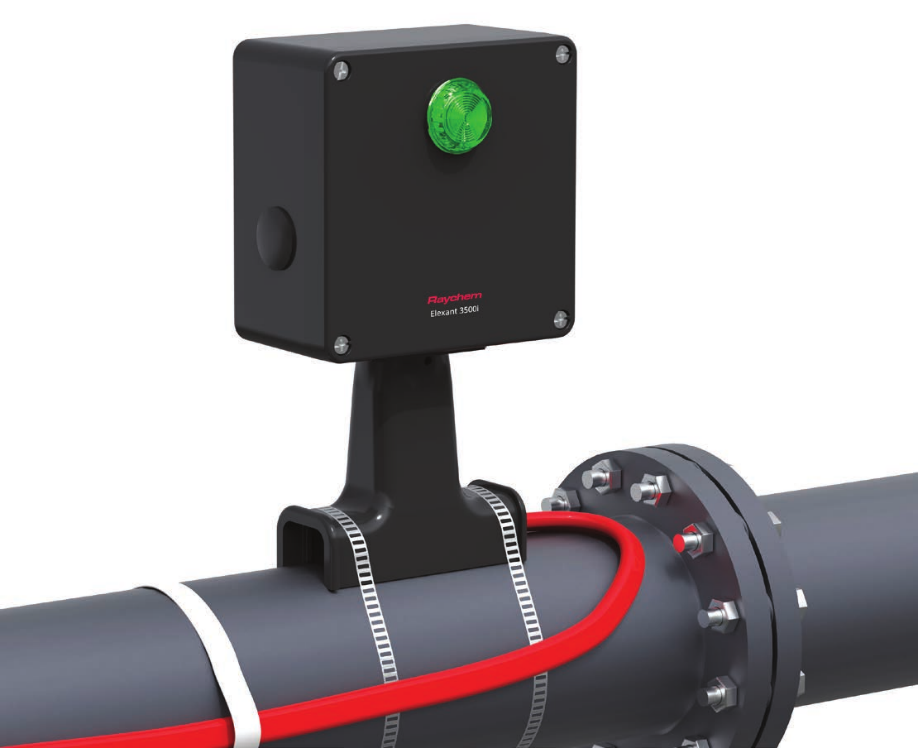
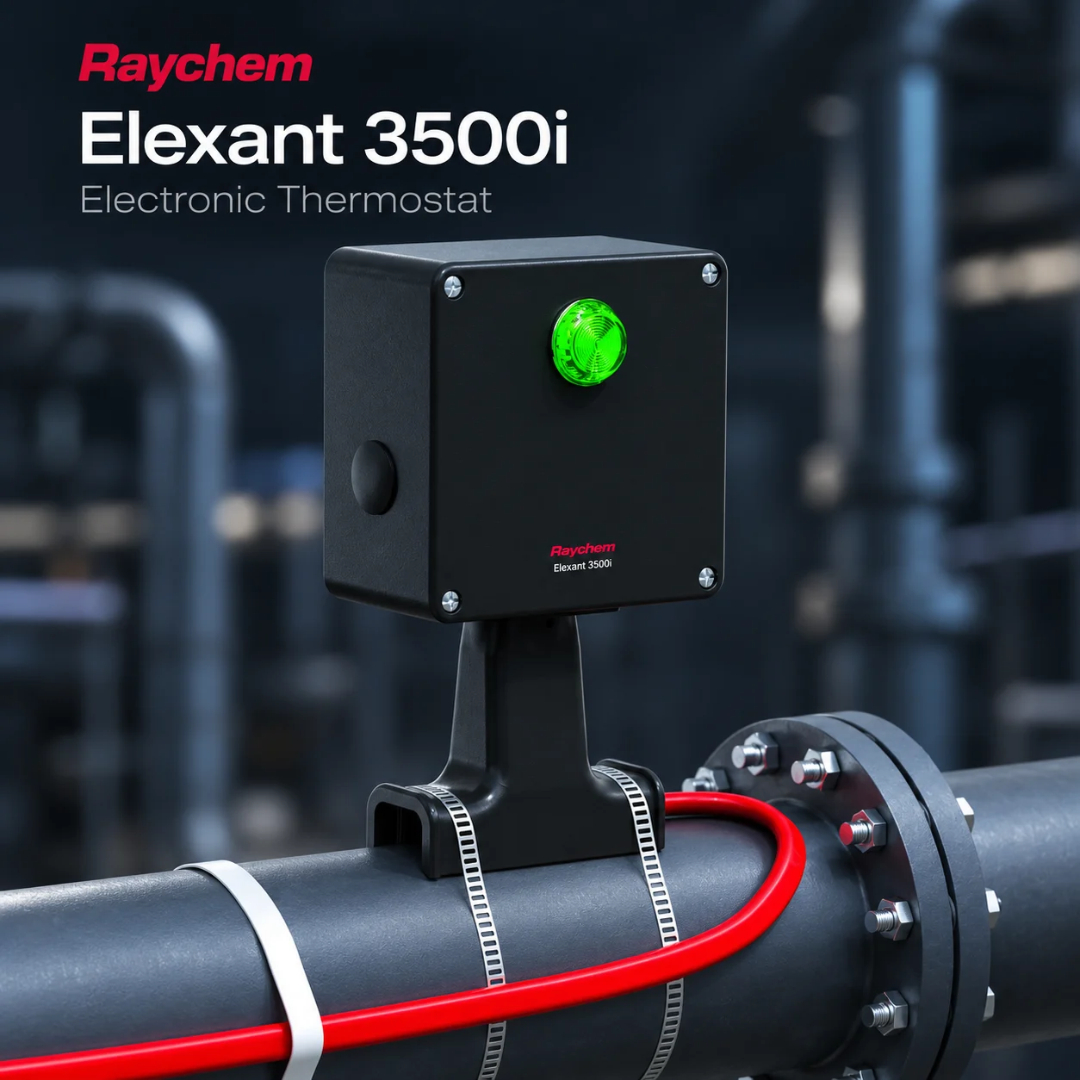
Keeping pipes, tanks and process lines at the right temperature shouldn’t require a tangle of components, a clipboard of manual checks, or a trip to the field every time a setpoint needs adjusting. RELCON has been at the forefront of heat tracing for decades, and we’re excited to introduce the newest innovation in heat trace control: the Raychem Elexant 3500i Electronic Thermostat.

The Elexant 3500i is a family of compact, full-featured electronic thermostats designed for heat tracing control and monitoring in both freeze protection and process temperature maintenance applications. It’s built to install faster, adapt to your needs, and keep you informed about your system around the clock.

One Platform, Five Variants, Two Mounting Options

Designed from a common hardware platform, the Elexant 3500i offers five variants and two enclosure types (wall mount and pipe mount), giving you the flexibility to tailor the control solution to your exact heat tracing requirements. Whether you need a simple local thermostat with an indicator light or a fully connected controller with load sensing and ground fault detection, there’s a configuration that fits.

Available features include an alarm relay, RS-485 and Bluetooth connections, load sensing, ground fault detection, an automated heat trace system check, and a mobile app for wireless configuration. The Elexant 3500i is suitable for both hazardous and non-hazardous locations.

Why the Elexant 3500i Stands Out

Fast Installation with Minimal Components

  • Quick connect terminals deliver fast and secure cable connections.
  • Power connection and thermostat in one, supporting up to two heating cables from a single unit.
  • Robust wall-mounted or pipe stand enclosures minimize the components and tools required on site.
  • Approved to 32 A and 277 Vac, allowing longer heating cable lengths and fewer circuits overall.

Flexible Design. Reliable Performance.

  • Five electronic module variants to match your needs, from a local indication light to remote communication, current sensing and ground fault sensing.
  • Interchangeable electronic modules make upgrades hassle-free. Start with what you need today and step up later without replacing the enclosure.
  • Globally approved for hazardous areas in extreme environments from –55°C to +60°C (–67°F to +140°F).
  • A hybrid switching relay (SSR + EMR) rated to 250,000 power cycles for superior product life (IEC 60079).

Interchangeable electronic modules and quick connect terminals simplify installation and upgrades

Connected Operation. Automated Monitoring.

  • Bluetooth configuration from a mobile device or tablet using the Elexant Connect App.
  • DCS connectivity for remote control and monitoring. Be in full control, anywhere, anytime.
  • A 24-hour auto-test provides early warnings and supports predictive maintenance.
  • The “Find Me” feature uses Bluetooth to quickly identify and locate a specific Elexant 3500i thermostat in the field.

Make Your Smart Choice in Three Steps

Selecting the right Elexant 3500i is straightforward:

  • Choose your enclosure. Select a wall mount or pipe mount model, both built on the same standard modular design.
  • Choose your variant. Pick the feature set that matches your application, from Standard through Ground Fault Detecting.
  • Upgrade when needed. Swap in a more capable electronic module as your monitoring and control requirements grow.
FeatureStandard (-ST)Alarm (-AR)Communi- cating (-C)Current Sensing (-I)Ground Fault Detecting (-GF)
Modular Design✓✓✓✓✓
Quick Connect✓✓✓✓✓
Local Indicator Light✓✓✓✓✓
Alarm Relay✓✓✓✓
Temperature Sensors11123
Secured Configuration✓✓✓
Central Communication✓✓✓
Programmable as a Temperature Limiter✓✓✓
Auto Test✓✓
Load Sensing✓✓
Ground Fault Protection✓

Key Specifications at a Glance

Supply Voltage100–277 Vac, ±10%, 50–60 Hz
Maximum Current32 A @ 40°C (104°F), linearly derated to 24 A @ 60°C (140°F)
Ambient Operating Temperature–55°C to +60°C (–67°F to +140°F)
Control Temperature RangeUp to +550°C (+1022°F); down to –55°C (–67°F) on -C, -I and -GF variants
Enclosure ProtectionType 4X, IP66
MountingWall mount or pipe mount (pipe temperatures up to 205°C / 401°F)
Hazardous Area ApprovalClass I, Div. 2, Groups A, B, C, D T5; Class II, Div. 2, Groups F, G
CommunicationsRS-485 Modbus RTU (up to 247 thermostats per network); Bluetooth BLE 5.1, encrypted and password protected
Ground FaultGF Alarm or GF Trip at 30 mA or 50 mA, UL 1053 compliant (-GF variant)
SwitchingHybrid relay (SSR + EMR) rated to 250,000 power cycles
Heating Cable CompatibilityBTV-CR, BTV-CT, QTVR-CT, XTV-CT, XTVR-CT, KTV-CT, HTV-CT, VPL-CT, 2SC-30/40/50

Specifications per the Raychem Elexant 3500i datasheet (RAYCHEM-DS-N00406). Refer to the full datasheet for complete details and ordering information.

Part of a Bigger Heat Tracing Picture

The Elexant 3500i doesn’t work in isolation. It can be connected with other Raychem controllers, Raychem Supervisor software, and your central DCS, giving you a complete view of heat tracing across your facility:

  • Field controllers and panels: configuration and monitoring via the local user interface or tablet, with integration to your DCS or Raychem Supervisor.
  • Data analytics and monitoring: secure data collection and analysis combined with remote monitoring and configuration of heat tracing circuits.
  • Connectivity: wired or wireless connection of all components for full heat trace visibility over your entire facility.
  • Life cycle services: minimize operational downtime with audits, field support, remote or embedded services, and annual service programs.

Why Partner with RELCON

With over 65 years of continuous family leadership, RELCON brings uninterrupted technical excellence to every heat tracing project. Our goal is to deliver effective solutions to our customers while ensuring dependable service after the sale. Customer service is a priority, and we stand behind both the products we offer and the customers who rely on them.

Ready to upgrade your heat trace control?

Our team can help you select the right Elexant 3500i variant and mounting option, confirm heating cable compatibility, and plan integration with your existing control system.

Talk to our team today.

by wfcadmin wfcadmin

Common Heat Tracing Problems During Cold Weather

When temperatures drop across the Midwest, your heat tracing system carries the full weight of keeping pipelines, instrumentation, and critical infrastructure running safely. Most failures don’t happen because heat trace “doesn’t work” — they happen because a small, preventable issue was left unchecked until the cold made it a big one. Below, the RELCON team breaks down the most common heat tracing problems we see every winter, why they happen, and how proactive maintenance keeps your facility protected.

Nuisance Ground-Fault (GFEPD) Trips

One of the most frequent service calls we get during the first hard freeze is for circuits that keep tripping their ground-fault equipment protection device (GFEPD). While a genuine ground fault should always be investigated, nuisance trips are often caused by:

  • Moisture intrusion at splices, end seals, or power connection kits that were not properly sealed
  • Damaged cable jacketing from installation abrasion, wildlife, or UV degradation over multiple seasons
  • Aging cable that has reached the end of its serviceable life and is leaking current as insulation resistance drops

A repeat trip is a warning sign, not an inconvenience — it means the circuit is telling you something before it fails outright.

Moisture Intrusion at Terminations and Splices

Every point where heat trace cable is cut, spliced, or terminated is a potential entry point for water. Once moisture works its way past a compromised seal, it can freeze, expand, and destroy the connection from the inside. This is one of the top reasons RELCON recommends Chemelex (Raychem) connection kits and factory-trained installation — a properly sealed splice or end termination is the difference between a system that lasts decades and one that fails its first hard winter.

Undersized or Poorly Designed Systems

Heat tracing is an engineering exercise, not a one-size-fits-all product. Problems show up when a system was designed around rough assumptions instead of accurate heat-loss calculations. Common design gaps include:

  • Pipe insulation that was undersized, damaged, or omitted after installation
  • Circuit lengths that exceed the cable’s maximum run for the available voltage
  • Failure to account for wind exposure, elevation, or true regional design temperatures

A system engineered for “average” Midwest winters will struggle the moment temperatures drop below design assumptions — which is exactly when you can least afford a failure.

Controller and Sensor Malfunctions

Modern heat trace systems rely on electronic controllers and temperature sensors to cycle power efficiently and safely. When these components drift out of calibration, fail, or are programmed incorrectly, the results range from wasted energy to unprotected pipe. Watch for:

  • Sensors placed too far from the pipe surface, causing inaccurate temperature readings
  • Controllers left on outdated setpoints from a prior season or a different process
  • Communication faults in networked or SCADA-integrated control systems

Panel and intelligent controller programming is one of the most requested services on our troubleshooting calls — and often one of the fastest fixes once the root cause is identified.

Voltage Drop and Circuit Overload

Self-regulating heat trace cable draws more current as ambient temperatures fall, which means circuits that were fine in October can be pushed to their limits in January. Long circuit runs, undersized breakers, or shared loads on the same panel can all lead to voltage drop severe enough to leave the far end of a pipe run under-protected.

Damaged or Deteriorated Insulation

Heat trace cable is only as effective as the insulation covering it. Torn, wet, or missing insulation — often the result of contractor foot traffic, wildlife, or age — lets heat escape faster than the cable can replace it. This is one of the easiest problems to miss visually and one of the most common findings during a RELCON system audit.

Deferred Maintenance

The single biggest driver behind cold-weather heat trace failures is simple: systems that haven’t been inspected since they were installed. Heat tracing is largely out of sight, out of mind — until a frozen line shuts down production or triggers a fire sprinkler failure. An annual pre-season inspection catches degraded connections, nuisance-trip patterns, and controller drift before the first freeze, not after.

How RELCON Keeps Your System Winter-Ready

RELCON Inc. has spent four generations engineering commercial, industrial, and utility freeze protection — not guessing at it. As a strategic partner of Raychem and a Honeywell Diamond Channel Partner, our team offers:

Don't Wait for the First Hard Freeze

The problems above rarely announce themselves until a pipe is already frozen. A short inspection now can prevent a costly shutdown later.

TAKE ACTION TODAY – SCHEDULE YOUR ASSESSMENT HERE

Our calendar is filling quickly. Secure your assessment by calling or reaching out online — your facility deserves the protection that only comes from four generations of thermal expertise.

by wfcadmin wfcadmin

RELCON Acquires Geneva Engineering & Design LLC

RELCON is excited to announce the acquisition of Geneva Engineering & Design LLC, a full-service mechanical engineering and design firm specializing in hydraulic systems, rotating machinery, and mechanical design. This acquisition strengthens RELCON’s in-house engineering bench and extends the range of technical services we can offer our clients — from concept through certified, stamped deliverables.

About Geneva Engineering & Design

Geneva Engineering & Design LLC was founded in 2021, growing from a side project into a full-time engineering practice by August 2024. The firm takes its name from the Geneva mechanism — a mechanical linkage famous for translating continuous rotation into precise, intermittent motion — and has built its reputation on the same principles of punctuality, repeatability, and simplicity in every project it delivers.

The firm is led by James “Robby” Marschand, P.E., a Purdue University–trained mechanical engineer with eight years of professional engineering experience and over a decade of CAD design work. Robby earned his Indiana Professional Engineer licensure in 2024 after passing the Mechanical – Machine Design and Materials PE exam, joining an estimated 206 other machine-design-focused PEs in the state of Indiana. His technical publication record includes multiple papers on digitally actuated radial piston pump and pump-motor design — work that reflects deep, hands-on expertise in hydraulic component innovation.

What This Means for RELCON Clients

With Geneva Engineering & Design now part of the RELCON family, clients gain direct access to a broader and deeper set of engineering capabilities, including:

  • 2D & 3D CAD Modeling — Full-capability modeling in Solidworks 2023, with output ready for 3D printing or CNC laser/plasma cutting.
  • Technical Documentation — Professionally drafted engineering specifications and technical sales literature.
  • Troubleshooting & Repair Consulting — Expert review of damaged or underperforming equipment, with practical, viable repair recommendations.
  • Technical Drawings — Machining, fabrication, and assembly drawings tailored to project-specific requirements.
  • Load Analysis (FEA) — Finite Element Analysis to validate reliability while minimizing material and manufacturing cost.
  • Component Selection & System Design — Complete design of hydraulic, pneumatic, and mechanical systems, or expert selection of replacement components.

Why This Acquisition Matters

This acquisition isn’t just about adding services — it’s about adding proven, specialized expertise. Robby’s PE licensure means RELCON can now offer clients engineering documents backed by a licensed Professional Engineer’s stamp, a critical requirement for many regulated or high-liability projects. His research background in digital pump technology and hydraulic actuation brings cutting-edge insight to any project involving fluid power or rotating machinery. And Geneva’s established CAD portfolio, built entirely in Solidworks, means new projects can move quickly from concept to accurate, manufacturable models.

For clients, the result is simple: faster turnaround, tighter integration between design and engineering validation, and one more trusted partner behind every deliverable RELCON produces.

Looking Ahead

RELCON is thrilled to welcome Robby Marschand and the Geneva Engineering & Design team aboard. We look forward to combining Geneva’s precision engineering pedigree with RELCON’s existing capabilities to deliver even greater value to our clients.

Stay tuned for more updates as we continue to grow our team and expand what we can offer.

Interested in learning more about our expanded mechanical engineering and design services? Reach out to the RELCON team today.

by wfcadmin wfcadmin

Winterize Now: Why Bruest Catalytic Heaters Are the Safe, Flameless Choice for Cold-Weather Gas Operations

Every winter brings the same risks to natural gas utilities, industrial facilities, and field operations: frozen piping, instruments that drift or fail in the cold, condensation inside measurement equipment, and crews working in punishing conditions. Each of those problems can lead to unplanned downtime, costly repairs, and safety concerns at exactly the time of year when reliable service matters most.

The good news is that winter problems are largely preventable. With the right heating solution in place before temperatures drop, your sites can keep running safely all season long. That’s why Relcon partners with Bruest Catalytic Heaters, a trusted manufacturer of flameless infrared heating built specifically for hazardous, cold-weather, and sensitive-equipment applications.

What Makes a Catalytic Heater Different?

Conventional gas heaters rely on combustion. Natural gas ignites in air at approximately 1,260°F, producing an open flame that heats the surrounding air. In a hazardous location where gas may be present, that flame is a serious liability.

Catalytic heaters work on a fundamentally different principle. Bruest heaters use a platinum catalyst that triggers an oxidation-reduction reaction at a temperature below the auto-ignition point of the fuel. The energy in the gas is released as infrared energy, carbon dioxide, and water vapor, with no flame and no spark.

The result is radiant heat that behaves much like light. Just as a light bulb floods a room with light, a catalytic heater floods its surroundings with thermal energy. That radiant energy passes through the air as an electromagnetic wave and heats only the solid or liquid surfaces it reaches, such as instruments, piping, and people, rather than wasting fuel warming the air. This makes catalytic heat especially effective in drafty or open environments where conventional convective heat quickly escapes.

How a Bruest Catalytic Heater Works

Operation is straightforward and designed with safety in mind:

  • Warm-up: An enclosed electric heating element preheats the catalytic pad. Typical warm-up time is about 15 to 20 minutes.
  • Gas introduction: Once the pad is warm, gas is introduced through the safety valve, if so equipped, to begin the catalytic heating process.
  • Dispersion: Gas enters through the dispersion tube assembly and is spread evenly by the dispersion screen.
  • Catalytic conversion: The gas diffuses through the insulation, contacts the catalyst, and is converted into steady, flameless infrared heat.

Where Bruest Catalytic Heaters Protect Your Operation

Bruest heaters are suitable for a wide range of heating applications. Four of the most common are especially important heading into winter.

Instrument Heating
Gas measurement and control instruments are sensitive to cold and moisture. Bruest heaters protect this equipment from cold-weather failure and condensation, helping keep readings accurate and systems online.

Freeze Protection
A single frozen line can shut down a site. Catalytic heat prevents pipe freeze-ups and costly shutdowns without introducing a flame or ignition source into the area.

Building & Enclosure Heat
Bruest heaters efficiently warm metering stations, valve houses, and portable structures, keeping the equipment inside protected and serviceable throughout the season.

Personnel & Portable Heating
Crews in the field need warmth too. Portable Bruest units provide safe, flameless heat for crew shelters and temporary work sites.

Why Choose Bruest Catalytic Heaters?

Flameless safety: Bruest heaters operate below the auto-ignition temperature of natural gas, with no open flame and no spark risk. All Bruest heaters are available for installation in Class I, Division 1 or 2, Group D locations, and ATEX certifications are available for applicable hazardous areas.

Infrared efficiency: Because radiant heat warms surfaces directly instead of the surrounding air, it can be up to 40% more efficient than convective heating, with faster warm-up and lower fuel consumption.

Cold-weather ready: After a 15 to 20 minute warm-up, the catalytic pad delivers consistent heat, even in sub-zero environments where conventional heaters struggle.

Versatile sizing: Bruest heaters come in multiple sizes, BTU ratings, and configurations, from portable personnel units to full enclosure heating systems.

The Relcon Advantage

Choosing the right heater is about more than picking a model from a catalog. The correct solution depends on what you’re protecting, the hazardous-area classification at your site, ambient temperature and wind exposure, required BTU output, available fuel and supply pressure, and how the heater will be mounted.

That’s where Relcon comes in. Backed by more than 65 years of engineered sales and service expertise, our team helps you specify, install, and troubleshoot the right Bruest catalytic heater for your application. We’ll walk through your site conditions and compliance requirements with you, so the heater you install is the heater you actually need.

Don’t Wait for the First Freeze

Lead times increase and schedules fill up quickly once cold weather arrives. The best time to winterize is before the first freeze, not after an instrument fails or a line freezes. Let Relcon help you assess your sites, specify the right heater and configuration, and get everything in place ahead of the season, so you can avoid downtime, protect your equipment, and keep your crews safe.

Ready to get started? Contact the Relcon team to schedule your winterization planning session, or learn more about Bruest Catalytic Heaters.